Handicapped Ramp Slope: The Complete Guide for Safe, ADA-Compliant Wheelchair Access in Philadelphia
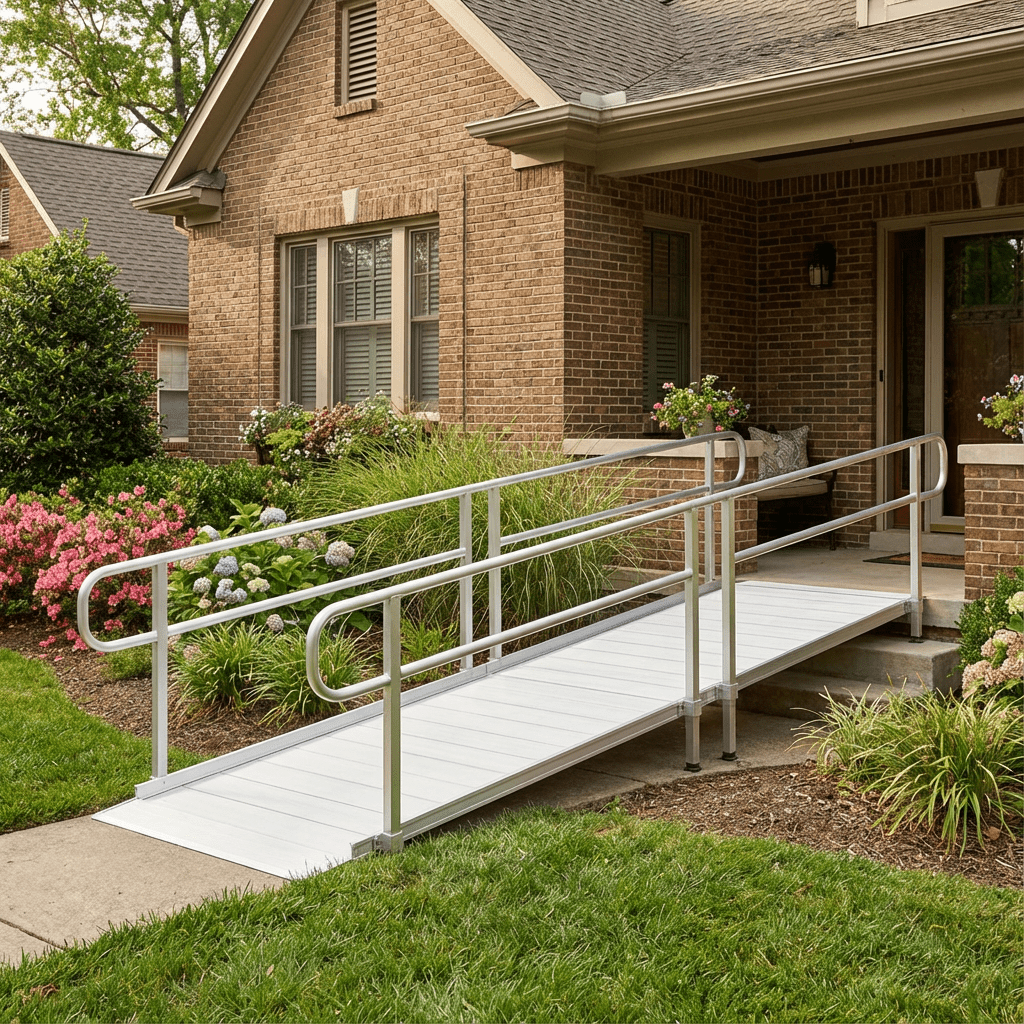
Creating safe and accessible spaces requires a clear understanding of proper handicapped ramp slope as it plays a vital role in ensuring safe, comfortable and independent access for wheelchair users, seniors and people with mobility challenges. Whether you are designing a wheelchair ramp slope for home or ensuring ADA ramp requirements for a commercial property in Philadelphia, knowing the proper incline length and safety standards helps ensure smooth movement and long term accessibility.
Why Handicapped Ramp Slope Matters More Than You Think
The slope of a ramp determines:
- How safe it is for wheelchair users
- How much force is needed to push a manual chair
- Whether power chairs can climb without strain
- Whether the structure meets ADA requirements
- Long-term usability for aging homeowners
Philadelphia has thousands of older buildings and rowhomes where stairs are unavoidable. That’s why choosing the right handicap ramps for stairs is essential for both residential mobility and commercial ADA compliance.
Wheelchair Ramp Slope: What You Must Understand
The wheelchair ramp slope refers to the steepness or incline of the ramp. A gentle slope provides safer access for wheelchair users, especially seniors or individuals with limited upper-body strength.
When choosing handicap ramps for stairs, the slope serves as the foundation for safety, ADA compliance, and comfort.
ADA Ramp Slope Requirements
Here are the official ADA ramp slope requirements:
ADA Standards for Accessible Design:
- 1:12 maximum slope for wheelchair ramps
- 1-inch rise = 12 inches (1 foot) of ramp length
- Maximum rise per run: 30 inches
- Minimum width: 36 inches clear space
- Handrails required: If ramp rises more than 6 inches
- Landings required: Every 30 feet (or 30-inch rise)
These ADA ramp requirements are non-negotiable for:
- Offices
- Clinics
- Retail stores
- Schools
- Government buildings
- Multi-tenant housing
Installers in Philadelphia must follow these rules to avoid compliance violations.
Wheelchair Ramp Slope for Home
Unlike commercial spaces, homes aren’t legally required to follow ADA standards, but most contractors still recommend ADA slopes for safety.
For wheelchair ramp slope for home, here are ideal values:
Best Residential Ramp Slopes
- 1:12 slope: Safest for seniors and manual wheelchair users
- 1:10 slope: Acceptable for short rises or limited space
- 1:8 slope: Only for very short, portable ramps
If you’re selecting handicap ramps for stairs inside or outside a home, slope angle and length matter for safe navigation.
Maximum Slope for Wheelchair Ramp
Commercial (ADA Required):
- Maximum slope for wheelchair ramp: 1:12
Residential (recommended but flexible):
- Comfort slope: 1:12
- Steep but usable slope: 1:10
- Short temporary ramp slope: 1:8
A steeper incline increases risk dramatically, especially for seniors, people with motor disabilities, or caregivers pushing a manual wheelchair.
That’s why contractors in Philadelphia strongly recommend sticking with the 1:12 standard handicap ramp slope even for residential installs.
Handicap Ramp Slope and Length Calculator
To create a safe wheelchair ramp, you must calculate:
Formula:
Ramp length = Total rise (in inches) × Slope ratio
Example using ADA slope:
- Rise = 20 inches
- Slope = 1:12
- Length = 20 × 12 = 240 inches (20 feet)
This is where a wheelchair ramp slope calculator becomes essential. It instantly gives:
- The correct ramp length
- The proper wheelchair ramp slope angle
- ADA-compliant dimensions
- Landing requirements
When building or choosing handicap ramps for stairs, using a calculator ensures:
- Precise measurements
- Safe incline
- Code compliance
- No guesswork
Understanding Wheelchair Ramp Slope Angle
The ramp angle determines how steep the ramp actually feels. Using a wheelchair ramp slope angle calculator helps determine the degree of incline.
ADA Recommended Angle:
- 4.8 degrees maximum
Residential preferred angle:
- 3–5 degrees
If the angle is too steep:
- Power chairs strain motors
- Manual wheelchairs require more push force
- Users risk tipping backward
A proper slope angle is critical for both permanent and portable handicap ramps for stairs.
Choosing the Right Handicap Ramp Slope Can Prevent Serious Injuries
The handicap ramp slope is more than just a measurement — it directly affects user confidence and daily independence. A ramp that is too steep can cause wheelchairs to roll backward, tip during ascent, or create dangerous speed while descending.
When planning a ramp, consider:
- The user’s upper body strength
- Whether a caregiver will assist
- Weather exposure (rain increases slipping risk)
- Frequency of daily use
A properly planned handicap ramp slope improves safety, reduces long-term maintenance issues, and ensures the structure remains functional for years. For permanent installations, gradual inclines provide better stability and reduce pressure on wheelchair brakes and motors.
The Slope of a Wheelchair Ramp Impacts Daily Comfort and Mobility
Many property owners focus only on getting from point A to point B. However, the slope of a wheelchair ramp determines how comfortable that journey feels every single day.
Even small changes in incline can:
- Increase arm fatigue for manual users
- Drain battery life in power chairs
- Cause hesitation or fear during descent
- Make independent access difficult
A well-designed slope of a wheelchair ramp allows smooth, controlled movement without sudden force or instability. Longer ramps with gentle inclines may require more space, but they significantly improve long-term usability and reduce fall risks.
Comfort should always be prioritized over convenience when designing mobility solutions.
ADA Ramp Slope Standards Set the Benchmark for Safe Access
The ADA ramp slope exists to create a uniform standard of accessibility across public and commercial spaces. These guidelines ensure individuals with mobility challenges can enter buildings safely without assistance.
Commercial properties must follow strict ratio limits to:
- Maintain equal access
- Avoid legal penalties
- Reduce liability risks
- Ensure structural consistency
Beyond compliance, the ADA ramp slope also reflects best-practice safety engineering. Even in residential settings, many contractors use these standards as a benchmark because they are proven to provide safe and manageable inclines.
When in doubt, building to ADA standards offers the safest long-term solution.
Wheelchair Accessible Ramp Slope Determines Long-Term Independence
A wheelchair accessible ramp slope directly influences how independently someone can move in and out of a property. If the ramp is too steep, users may depend on caregivers for assistance. If properly designed, it supports full self-sufficiency.
Key factors influencing wheelchair accessible ramp slope decisions include:
- Total vertical rise
- Available installation space
- Indoor vs. outdoor placement
- Permanent vs. modular ramp systems
- User mobility level
Gentler slopes encourage confident navigation and reduce anxiety for seniors and individuals recovering from injury. Over time, this design choice can greatly improve quality of life and daily freedom.
Accessibility should empower — not create new obstacles.
Types of Handicapped Accessible Ramps
Philadelphia properties typically use one of the following:
1. Permanent Concrete or Wood Handicap Ramps for Stairs
Best for:
- Front entrances
- Backyards
- Multi-level rowhomes
- Commercial entrances
Supports ideal handicapped ramp slope and ADA-compliant width.
2. Aluminum Modular Handicapped Accessible Ramps
Best benefits:
- Installed in hours
- Weather-resistant
- Good for both homes and businesses
- Perfect ADA ramp solution
3. Portable Wheelchair Ramps
Useful for:
- Temporary mobility needs
- Rental homes
- Events or travel
- Short-term rehab
Portable ramps allow flexible wheelchair ramp slope angle, but maximum length is limited.
4. Threshold Ramps
Best for:
- Small door transitions
- Uneven floors
- Minor height changes
These don’t replace full handicap ramps for stairs, but they complete accessibility.
At All Access, we design, measure, and install handicapped-accessible ramps, and residential wheelchair ramps with perfect slope and safety standards.
One thought on “Handicapped Ramp Slope: The Complete Guide for Safe, ADA-Compliant Wheelchair Access in Philadelphia”