Mobility Solutions Compared: Stair Lift Installation vs. Platform Lifts vs. Home Elevators
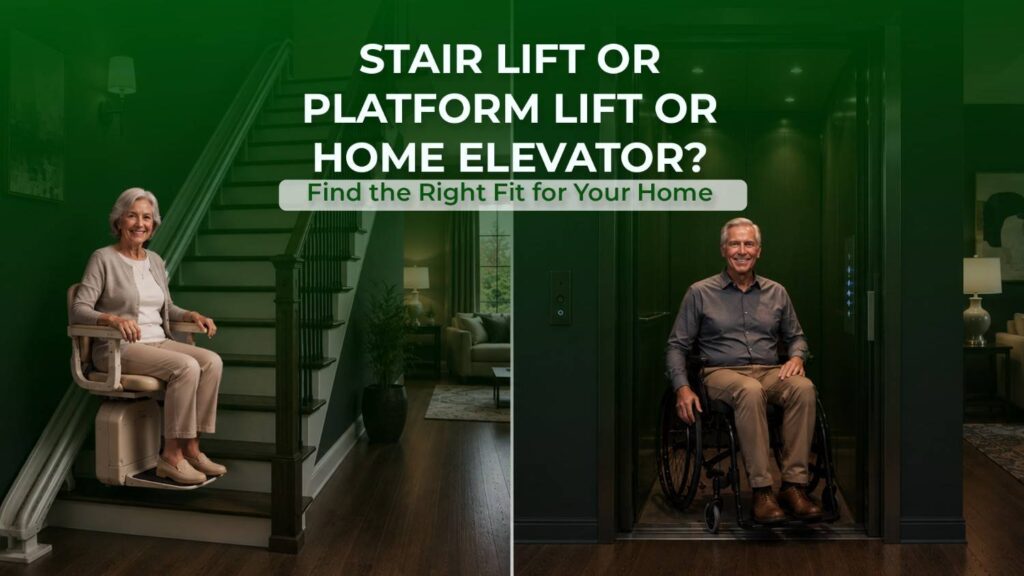
Choosing between mobility solutions for a multi-level home is rarely a simple decision. A staircase that once felt ordinary can quietly become the biggest obstacle to living comfortably at home, and the pressure to pick the “right” fix, quickly and without a costly mistake, weighs on families across Philadelphia every day. At All Access, we walk homeowners through this decision constantly, and the answer almost always comes down to three options: a stair lift, a platform lift, or a home elevator.
Each one solves a different problem. Stair lift installation is the fastest, most budget-friendly path for a single staircase. A platform lift bridges the gap for full-time wheelchair users who cannot transfer to a seated lift. A home elevator is the long-term, whole-house solution for households planning to age in place across multiple floors. This guide breaks down how each option works, what it costs, and how to figure out which mobility solution actually fits your home, your budget, and your body.
Why Mobility Solutions Matter for Aging in Place
Seventy-five percent of adults over 50 say they want to remain in their current home as they age, according to AARP’s Home and Community Preferences Survey, yet stairs remain one of the most common reasons families are forced to consider assisted living or a costly relocation. Falls compound the risk: the CDC reports that more than one in four older adults falls each year, and falls remain the leading cause of injury among people 65 and older. A staircase that requires daily climbing, gripping, and balancing turns a home from a sanctuary into a hazard.
The right mobility solution removes that hazard without uprooting a family’s life. Instead of selling a beloved rowhome or twin, homeowners across Philadelphia are increasingly choosing stair lifts for the elderly, platform lifts, or home elevators to stay exactly where they are, safely and confidently.
Quick Comparison: Stair Lifts, Platform Lifts, and Home Elevators
| Factor | Stair Lift | Platform Lift | Home Elevator |
|---|---|---|---|
| Typical cost | $2,500 to $15,000 | $8,000 to $20,000 | $20,000 to $50,000+ |
| Installation time | 1 day to 3 weeks | 1 to 4 weeks | 4 to 12 weeks |
| Wheelchair accessible | No, requires transfer | Yes | Yes |
| Structural changes | Minimal | Moderate | Significant |
| Best for | Ambulatory users, single staircase | Wheelchair users, moderate budget | Full-time wheelchair use, resale value |
Stair Lifts for the Elderly: Best for Speed, Budget, and Simplicity
A stair lift mounts directly onto the stair treads and carries a seated rider up and down the staircase along a custom rail. Because it attaches to the existing structure rather than replacing it, stair lift installation requires little to no structural modification, which makes it the fastest and least disruptive mobility solution available.
The tradeoff is transfer. A rider needs to move from a wheelchair or walker onto the lift seat at the top and bottom of the staircase. For someone who can make that transfer safely, a stair lift is often the ideal fit. For someone who cannot, it isn’t a viable long-term answer, and a platform lift or elevator becomes the better route.
How Stair Lift Installation Works
Our stair lift installation process starts with an in-home assessment of the staircase, whether it’s straight, curved, indoor, or exposed to Philadelphia weather on an exterior entry. Curved stair lifts use a rail custom-fabricated to match the staircase’s exact turns and landings, while straight staircases typically install within a day. Every system we install includes a swivel seat with a safety lock, so the lift will not move unless the rider is properly secured.
Who Stair Lifts for the Elderly Are Built For
Stair lifts work best for homeowners who:
- Can safely transfer from a wheelchair, walker, or standing position to a seat
- Have a single staircase rather than multiple floors requiring daily access
- Want a fast, minimally invasive installation without major renovation
- Are working within a tighter renovation budget
Philadelphia’s rowhomes and twins, with their narrow layouts and single central staircase, are especially well suited to this option. You can see real examples of how this looks in practice on our stair lift at home page.
Platform Lifts: The Wheelchair-Accessible Middle Ground
A platform lift, sometimes called a wheelchair stair lift, carries a wheelchair user, chair and all, up and down a staircase or short vertical rise without requiring a transfer. It moves slower than a seated stair lift and occupies more space along the staircase, but it solves the exact problem a standard stair lift cannot: staying in the wheelchair throughout the ride.
Platform lifts tend to make the most sense for:
- Full-time wheelchair users navigating a single flight of stairs
- Homes with porch, entry, or short vertical elevation changes rather than full multi-floor access
- Situations where a full elevator isn’t structurally realistic or financially necessary
When a Platform Lift Makes More Sense Than a Stair Lift
If transferring from a wheelchair to a seat isn’t safe or possible, a platform lift closes that gap without the cost and construction timeline of an elevator. It’s a middle-ground mobility solution, more capable than a stair lift, less invasive than a full elevator installation.
Home Elevators: Whole-House Mobility Solutions for the Long Term
Residential elevators move a rider between floors inside an enclosed cab, functioning much like a small commercial elevator. Because they typically require a shaft, structural reinforcement, and dedicated electrical work, home elevators come with the highest cost and the longest installation timeline of the three mobility solutions, but they also offer the most complete, long-term access.
Home elevators make the most sense when:
- The household includes a full-time wheelchair user who needs access to multiple floors, not just one
- The project is being planned as a permanent, decades-long aging-in-place solution
- Resale value matters, since a properly installed, code-compliant elevator can be a genuine selling point in a multi-story home
What to Expect From a Home Elevator Installation
Expect a more involved process than either a stair lift or platform lift: architectural planning, permitting, and several weeks to a few months of construction. It’s a bigger investment upfront, but for households committed to staying in a multi-story home indefinitely, it often pays for itself in avoided moving costs and long-term flexibility.
How to Decide Which Mobility Solution Fits Your Home
Three questions narrow the decision quickly:
- Can the person safely transfer from a wheelchair or walker to a seat? If yes, a stair lift is usually the fastest, most affordable mobility solution. If no, a platform lift or elevator is the better fit.
- Is this a single staircase or multiple floors? Stair lifts and platform lifts are built for one flight. Daily access across multiple floors points toward a home elevator.
- What’s the realistic budget and timeline? Stair lift installation can happen within days for a few thousand dollars. Elevators are a multi-month, five-figure project.
If your home also has uneven entryways or a bathroom that’s become difficult to navigate safely, it’s worth looking at those areas too. Many of our clients pair stair lift installation with a wheelchair ramp, grab bars, or an ADA-compliant shower as part of one coordinated home accessibility remodeling plan, since fall risk rarely lives in just one room.
Why Philadelphia Homeowners Choose All Access for Stair Lift Installation
All Access has spent years helping Philadelphia families navigate exactly this decision. Our team evaluates your staircase, your mobility needs, and your budget, then recommends the mobility solution that actually fits, not the one that’s easiest to sell. Every stair lift installation is customized to your home’s layout, whether that means a curved rail for a historic rowhome staircase or a weather-ready exterior unit for a porch entry. Learn more about our approach on our about page, or explore the full range of solutions on our homepage.
Watch: See These Mobility Solutions in Action
Frequently Asked Questions
Can a stair lift be installed on a curved staircase? Yes. Curved stair lifts use a custom-fabricated rail built to match the exact shape of the staircase, including landings and turns.
Do platform lifts require a permit? In most Philadelphia jurisdictions, yes, since platform lifts involve more structural work than a standard stair lift. A licensed installer handles permitting as part of the project.
Is a home elevator worth it for resale value? Often yes, particularly in multi-story homes. A properly installed, code-compliant elevator can be a meaningful selling point for buyers who plan to age in place or have mobility needs in the household.
How long does stair lift installation take? A straight staircase can often be completed in a single day. Curved staircases requiring a custom rail typically take one to three weeks from assessment to installation.
What’s the difference between a platform lift and a home elevator? A platform lift carries a wheelchair user up a single flight of stairs without a transfer. A home elevator moves riders between multiple floors inside an enclosed cab and requires more significant construction.
Ready to find the right mobility solution for your home? Schedule a free assessment with All Access and we’ll help you compare stair lift installation, platform lifts, and home elevators side by side.