Does Medicare Cover Stair Lifts? A Philadelphia Family’s Guide to Coverage, Costs, and Financing
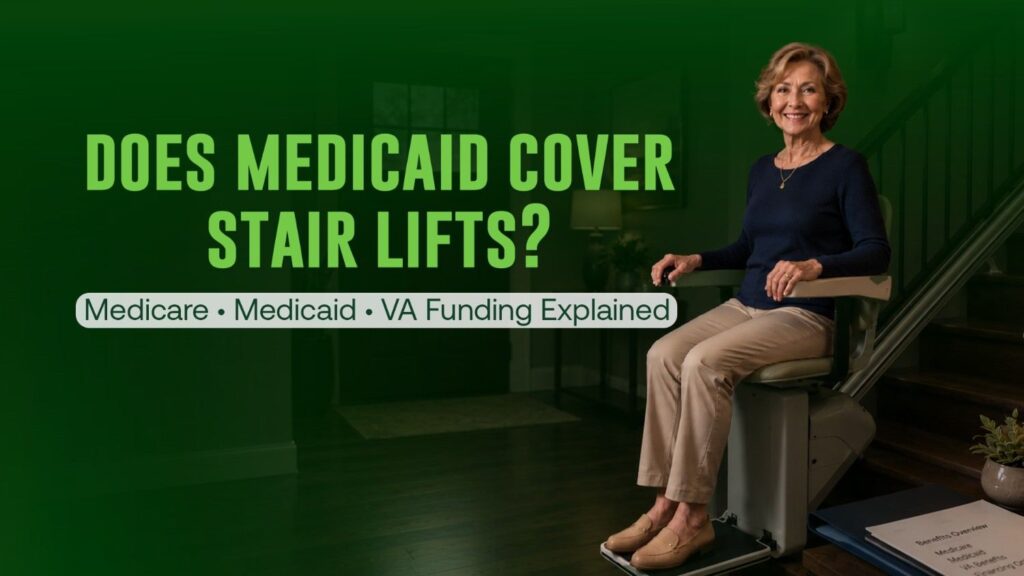
If you’ve started researching mobility solutions for a parent or spouse, you’ve probably typed the same question into Google that thousands of Philadelphia families ask every month: does Medicare cover stair lifts? It’s a fair question. Medicare pays for wheelchairs, hospital beds, and walkers, so it seems reasonable to assume a stair lift would fall under the same umbrella. Unfortunately, the answer isn’t what most people hope to hear, but it also isn’t the end of the road.
This guide breaks down exactly what Medicare will and won’t pay for, where Medicaid and VA programs pick up the slack, and how Philadelphia homeowners typically fund a stair lift installation without draining their savings.
The Short Answer: Does Medicare Cover Stair Lifts?
No. Original Medicare, meaning Part A and Part B, does not cover stair lifts. The reason comes down to how Medicare classifies equipment. Stair lifts are treated as home modifications rather than durable medical equipment (DME), and Medicare’s DME benefit only extends to portable items used for a medical purpose, like walkers or oxygen equipment. Because a stair lift is bolted to your staircase and becomes a permanent fixture of the home, it falls outside that category no matter how medically necessary it feels to the person using it.
This is one of the most common gaps families run into once a parent starts struggling with stairs, and it catches even people who have carried Medicare for years by surprise. Some Medicare Advantage (Part C) plans have started offering limited supplemental benefits for home safety modifications, so if you or a loved one has a Medicare Advantage plan rather than Original Medicare, it’s worth a phone call to ask directly whether stair lifts are included and what documentation the plan requires.
Why Medicare Draws the Line at “Home Modification”
It helps to understand the underlying rule rather than just memorizing the answer. Medicare Part B durable medical equipment coverage requires that an item:
- Serves a medical purpose
- Is generally not useful to someone who isn’t sick or injured
- Is appropriate for use in the home
- Is expected to last three years or more
Stair lifts satisfy most of that list, but Medicare has consistently held that because the equipment attaches to the structure of the house, it’s a renovation rather than DME, similar to how grab bars, widened doorways, and wheelchair ramps are also excluded. So while the question “does Medicare cover stair lifts” comes up constantly in searches, the more useful framing is “how do families pay for something Medicare was never designed to cover.”
Does Medicare Cover Stair Lifts Through Medicare Advantage?
Traditional Medicare’s answer is firm, but Medicare Advantage plans operate a little differently since private insurers administer them. A growing number of Advantage plans now offer supplemental benefits aimed at aging in place, and some of these plans will reimburse a portion of a home modification, including stair lifts, if a doctor documents medical necessity. Coverage limits, prior authorization rules, and approved vendor lists vary enormously from plan to plan, so this isn’t something to assume. Calling the member services number on the back of the insurance card and asking specifically about home safety or home modification benefits is the only reliable way to find out.
Does Medicaid Cover Stair Lifts in Pennsylvania?
This is where the picture brightens considerably for many families. While Medicare’s standard benefit excludes stair lifts outright, Medicaid can cover them in certain circumstances, and Pennsylvania has more than one pathway to get there.
Home and Community-Based Services (HCBS) Waivers
Pennsylvania’s Department of Aging (PDA) Waiver and the Community HealthChoices (CHC) program both fall under the umbrella of Home and Community-Based Services. These waivers exist specifically to help older adults and people with disabilities avoid nursing facility placement by making it safer to stay in their own homes. Environmental accessibility adaptations, including stair lifts, wheelchair ramps, and walk-in tubs, are commonly approved line items under these waivers when a case manager and physician document medical necessity.
To qualify, applicants generally need to be at least 60 (or younger with a qualifying disability), meet the functional level of care typically required for a nursing home, and fall within Pennsylvania’s Medicaid financial eligibility limits. The process usually starts with a call to your local Area Agency on Aging or the Community HealthChoices managed care organization handling your case, followed by a home assessment and a written justification from a physician or occupational therapist.
If you’re helping a parent or spouse navigate this process, patience matters. Waiver applications can take weeks, and the stair lift itself typically needs to be specified as part of an approved care plan before installation, not after.
VA Grants: How Veterans in Philadelphia Get Stair Lifts Covered
Veterans have funding options that go well beyond what Medicare offers, and Philadelphia’s large veteran population makes this a frequent question for our team at All Access.
HISA Grants and Stair Lifts
The Home Improvements and Structural Alterations (HISA) grant is a lifetime VA benefit intended for medically necessary modifications to a veteran’s primary residence. It’s worth knowing that the VA’s official HISA fact sheet lists porch lifts and stair glides among the items specifically excluded from the structural alteration benefit, which trips up a lot of applicants who assumed HISA would cover a straight-rail stair lift automatically. In practice, whether a stair lift gets funded often depends on how the request is framed and which VA program it’s routed through, which is exactly why working with a provider who understands VA paperwork matters.
SAH and SHA Grants for Larger Modifications
For veterans with more significant service-connected disabilities, the Specially Adapted Housing (SAH) and Special Housing Adaptation (SHA) grants offer considerably larger funding amounts and broader flexibility, and stair lifts are more commonly approved as part of these bigger home adaptation plans. Eligibility depends on the nature and severity of the service-connected condition, so the right first step is a conversation with a Veterans Service Officer (VSO) or the VA’s Prosthetic and Sensory Aids Service to determine which program actually fits your situation.
Our coverage and care page walks through how our team helps veterans and their families sort out eligibility, paperwork, and documentation across these overlapping programs.
Local Financing Options for Philadelphia Homeowners
For families who don’t qualify for Medicaid waivers or VA grants, or who need a stair lift faster than the approval process allows, a few practical paths remain:
- In-house or third-party financing. Many accessibility providers, including All Access, offer payment plans that break the cost into manageable monthly installments rather than requiring payment in full upfront.
- Tax deductions. If a stair lift is installed for medical reasons, the cost may qualify as a deductible medical expense under IRS Publication 502, particularly if a physician documents the necessity.
- Area Agency on Aging grants. Philadelphia Corporation for Aging and similar county-level organizations occasionally offer small home modification grants or connect families with local nonprofit funding.
- Combining sources. It’s common for a Philadelphia family to stack a partial Medicaid waiver contribution with private financing to close the gap, rather than relying on a single funding source.
What a Stair Lift Actually Costs Without Coverage
Pricing varies based on staircase length, whether the stairs are straight or curved, and whether the installation is indoor or outdoor. Straight-rail stair lifts for a standard interior staircase typically start in the low thousands, while curved rail systems custom-built for a specific staircase run significantly higher. Outdoor stair lifts and wheelchair platform lifts also carry different price points depending on weatherproofing and load capacity. Getting a home assessment is the only way to get an accurate number for your specific staircase, since layout affects cost more than almost any other factor.
Frequently Asked Questions
Does Medicare cover stair lifts if a doctor says it’s medically necessary? No. Even with a physician’s letter, Original Medicare’s DME benefit excludes stair lifts because of how the equipment is classified, regardless of medical necessity.
Does Medicare cover stair lifts for veterans differently than for other beneficiaries? Medicare’s rules are the same for everyone, but veterans have access to separate VA programs like HISA, SAH, and SHA that exist entirely outside of Medicare and can fund part or all of a stair lift installation.
If Medicare won’t pay, does Medicaid cover stair lifts automatically? Not automatically. Coverage runs through HCBS waiver programs in Pennsylvania, which require a functional and financial eligibility review before a stair lift can be approved and installed.
Will a Medicare Advantage plan cover a stair lift where Original Medicare won’t? Sometimes, but only through supplemental home safety benefits that vary by plan. It’s not guaranteed, so confirming directly with the plan is essential before assuming coverage exists.
Getting Started with Stair Lift Installation in Philadelphia
Every Philadelphia rowhome and multi-level property presents its own staircase quirks, from narrow hallways to tight turns that require a curved rail system. All Access has spent years installing stair lifts across Philadelphia, including options for wheelchair users and outdoor entry points that see the brunt of the city’s weather. Our team also helps families navigate the funding maze described above, from HISA paperwork for veterans to identifying which Medicaid waiver applies to a specific case.
If stairs have started to feel like the biggest obstacle in your home, a home accessibility assessment is the right first step, whether Medicare ends up covering any part of the cost or not. Our team can walk you through what your specific staircase requires and which funding sources you may actually qualify for.
This article is for general informational purposes and does not constitute medical, legal, or financial advice. Coverage rules for Medicare, Medicaid, and VA benefits change and vary by individual circumstance, so confirm current details with the relevant agency or your plan provider before making a decision.