9 Warning Signs to Start Home Modifications for Elderly Family Members
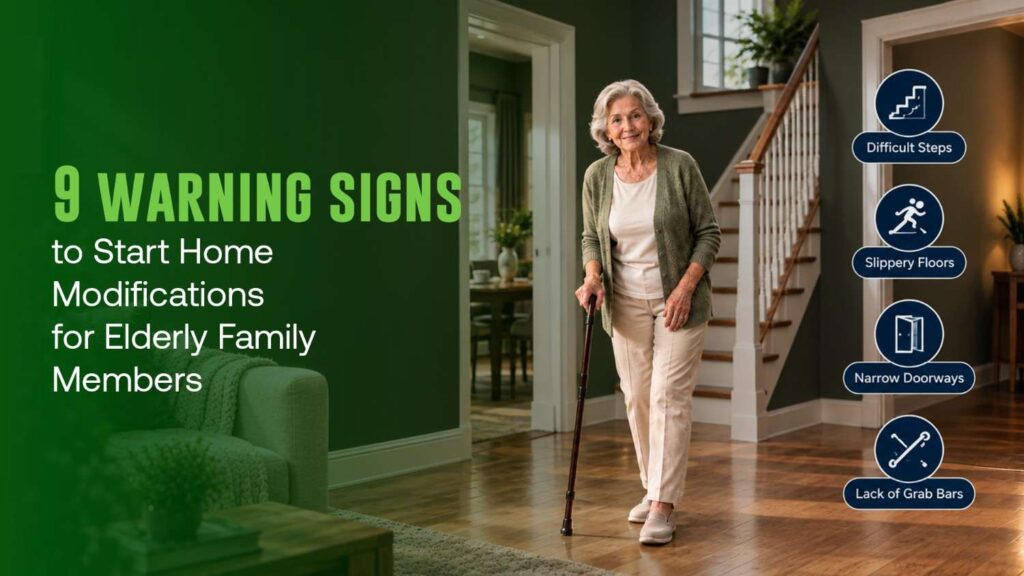
Most families don’t sit down and formally decide it’s time for home modifications for elderly parents or spouses. It happens in fragments: a missed step, a slippery tub floor, a doorway that suddenly feels too narrow for a walker. Each one seems small in isolation. Strung together, they’re usually the clearest signal a home has quietly fallen behind the person living in it.
Here are nine warning signs worth paying attention to. According to the CDC, falls remain the leading cause of injury among older adults, and the majority happen inside homes never built with mobility changes in mind. Catching these signs before an injury forces the issue is almost always safer, and cheaper, than reacting afterward.
Warning Sign 1: Stairs Have Become a Daily Struggle for an Elderly Parent
If someone in your household is pausing at the top of the stairs, gripping the railing with both hands, or quietly avoiding the second floor, that’s not stubbornness. It’s the body flagging a genuine risk. A stair lift installation resolves this without forcing a bedroom move or giving up a home someone loves. For households where a wheelchair is involved, a stair lift built for wheelchair users keeps someone seated for the entire ride between floors.
Warning Sign 2: Showering Has Become Unsafe for an Aging Family Member
Wet tile, a high tub wall, nothing sturdy to hold onto: bathrooms account for a disproportionate share of in-home falls. If bathing now requires extra caution, or a second person standing by, that’s the bathroom itself signaling it needs to change. Grab bars and ADA-compliant showers fix this directly, and installation is usually far less disruptive than people expect.
Warning Sign 3: An Elderly Family Member Struggles to Get Through the Front Door
A front step, a raised threshold, a porch with no railing: easy to ignore until someone using a walker, cane, or wheelchair genuinely can’t get through the door unassisted. When entry turns into a barrier instead of a formality, look at both temporary and permanent wheelchair ramp options, sized correctly with a proper ramp slope guide so the incline is safe rather than just present.
Warning Sign 4: Furniture Has Become an Elderly Parent’s Informal Support System
Watch for hands reaching for a dresser, a countertop, or a chair back while crossing a room. When furniture turns into informal support, it usually means the space needs real handrails or grab bars, not sturdier furniture.
Warning Sign 5: A Fall Signals It’s Time to Act on Elderly Safety
A stumble that didn’t quite become a fall is still useful data. It tells you exactly where the risk is concentrated. If a fall has already happened, even a minor one, treat it as a preview rather than a one-time event. This is one of the clearest triggers for home modifications for elderly to prevent falls before a second, more serious incident occurs.
Warning Sign 6: Daily Routines Are Quietly Shrinking for an Aging Parent
Skipping the shower for a sponge bath. Avoiding the basement laundry room. Eating meals in one room because the kitchen feels unmanageable. These adjustments often happen so gradually that families miss the pattern until someone names it out loud. Shrinking routines are one of the clearest signs a home no longer fits the person living in it.
Warning Sign 7: A Caregiver Is Straining to Support an Elderly Loved One
If a spouse, adult child, or home health aide is lifting, bracing, or physically supporting someone during transfers, that’s not sustainable for either person. The best home modifications for elderly parents protect the person providing care as much as the person receiving it, since caregiver injuries are common and frequently preventable.
Warning Sign 8: A Doctor Has Already Recommended Changes for an Elderly Patient
Occupational and physical therapists are often the first to flag accessibility gaps, because they observe movement in a clinical setting differently than it plays out at home. If a provider has raised ramps, grab bars, or a stair lift, that recommendation deserves follow-through even if daily life still feels workable.
Warning Sign 9: You’re Already Weighing the Cost of Waiting on Elderly Home Modifications
If you’ve caught yourself mentally comparing the cost of a fall or hospital stay against the cost of a modification, that instinct is worth listening to. Funding is often more available than families assume. Veterans and their families may qualify for VA housing assistance and grants, and many households can combine multiple senior insurance and funding solutions to bring costs down significantly. AARP’s research on aging in place consistently shows that small, targeted changes made early keep people safely and independently at home far longer than waiting for a crisis to force the issue.
How Many Signs Apply to Your Family?
If one sign applies to your household, keep watching closely. If two or three apply, it’s time to schedule an assessment. If four or more apply, treat this as urgent rather than something to revisit next season, since planning home modifications for elderly loved ones early is almost always cheaper and less disruptive than reacting after an injury.
Get a Professional Assessment, Not a Guess
Recognizing the warning signs can tell you something is off. It can’t tell you exactly what to prioritize or what it will cost. All Access offers in-home consultations across Philadelphia to walk through this exact list room by room, plan the right home modifications for elderly residents, and lay out realistic costs and funding options. Schedule a home accessibility assessment before a small warning sign turns into an emergency.