Portable Ramp for Wheelchair vs. Wheelchair House Ramp: Which One Fits Your Home?
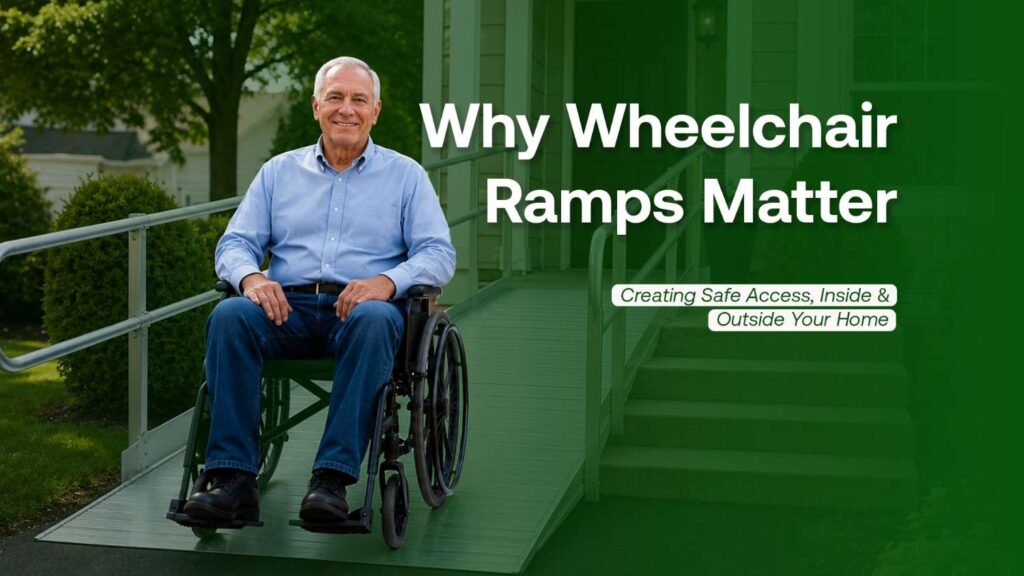
A single step doesn’t look like much until it stands between someone and their own front door. For wheelchair users and their families across Philadelphia, that gap between “I live here” and “I can get in here on my own” often comes down to one decision: a portable ramp for wheelchair access, or a permanent wheelchair house ramp. Both solve real problems. Neither is automatically the right answer for every home.
This guide walks through what separates the two options, where each one shines, and how to think through the decision without guessing. If you’d rather skip ahead and talk to someone who installs both types every week, reach out to our team for a free consultation.
Why Ramps Matter Inside and Outside the Home
Accessibility problems rarely announce themselves all at once. They show up as small, repeated frustrations that quietly shrink a person’s world.
Outdoor Barriers That Limit Independence
A few steps at the front entrance can strip away a person’s ability to leave for work, get to appointments, or simply visit family without waiting on someone else to help them down. An outdoor ramp restores that everyday freedom. It’s not a convenience item; it’s the difference between depending on other people and moving through your own day on your own schedule.
Indoor Barriers Are Just as Real
What surprises a lot of families is how much a single interior threshold can interrupt daily life. A half-inch lip between the kitchen and living room, a raised doorway into a bedroom, these small level changes can stall a wheelchair completely. Indoor ramps and threshold solutions smooth out those transitions so movement through the house feels continuous instead of segmented room by room.
Portable Ramp for Wheelchair Access: Flexibility When You Need It
A portable ramp for wheelchair access is built around one core advantage: it moves when your needs move. It’s not bolted to the property, which makes it a strong fit for situations that are temporary, changing, or not yet permanent.
When a Portable Ramp for Wheelchair Use Makes Sense
We see portable ramps used most often for front steps during a recovery period, garage access points, sliding door thresholds, rental properties where permanent construction isn’t an option, and short-term needs after surgery or injury. If the situation is fluid, a portable ramp gives you access without committing to a fixed structure.
What to Look for in a Quality Portable Ramp
Not all portable ramps are created equal. Look for aluminum construction (rust-resistant and weatherproof), a slip-resistant surface, and a slope that follows recommended safety ratios rather than whatever fits the space. A ramp that’s too steep defeats its own purpose no matter how sturdy the material is. Professional measurement of the entry height matters just as much as the ramp itself, since an improperly sized ramp can create the very hazard it’s meant to prevent.
Wheelchair House Ramp: A Permanent Path to Independence
When the need for accessibility isn’t going away, a wheelchair house ramp offers something a portable unit can’t: permanence, structural integration, and a solution custom-built for that exact entryway.
Signs You Need a Wheelchair House Ramp Instead
Consider a permanent ramp if the mobility need is long-term, if the entrance gets heavy daily traffic, or if you want the ramp to look like it belongs to the house rather than sitting on top of it. Homeowners planning to age in place often choose a wheelchair house ramp specifically because it removes the barrier for good instead of managing it season by season.
What Goes Into a Properly Built Wheelchair House Ramp
A well-designed wheelchair house ramp accounts for slope ratio, landing space at the top and bottom, handrail placement, and drainage so water doesn’t pool on the surface. These details are exactly why professional installation and remodeling beats a do-it-yourself build. Getting the slope wrong by even a few degrees turns a safety feature into a hazard.
Portable Ramp or Wheelchair House Ramp? How to Decide
The honest answer is that it depends less on preference and more on the situation:
- Choose portable if the need is temporary, the entrance layout may change, or the property is a rental.
- Choose permanent if the need is ongoing, the entrance sees daily use, or you’re planning long-term for aging in place.
- Choose both if you need a permanent solution at the main entrance and a flexible option for a secondary door, garage, or travel.
Many households end up owning both, using each ramp for the job it does best. Our team walks through this exact decision during every in-home assessment, so nobody has to guess which option fits.
Ramps Aren’t Just for Wheelchairs
It’s easy to think of ramps as a wheelchair-only solution, but that undersells what they actually do. Walkers, rollators, and other mobility aids all benefit from the same smooth, level transition a ramp provides. A family with one member using a wheelchair and another using a walker can rely on a single, correctly built ramp to serve both. Accessibility, done right, tends to help more people than the one it was originally built for.
Safety Features That Separate Professional Installation from DIY
A ramp is only as good as its weakest safety detail. Slip-resistant surfacing, secure handrails, a properly calculated slope, and stable footing in wet or icy conditions all matter more than the ramp’s price tag. Improper placement, on the other hand, creates exactly the kind of hazard a ramp is supposed to eliminate. That’s the reasoning behind every installation our team completes, whether it’s a temporary wheelchair ramp or a permanent structure built to last for years.
Watch Video on Instagram, YouTube.
Frequently Asked Questions
What are the best wheelchair ramps for residential use?
The best residential wheelchair ramps come down to matching the ramp type to the entryway rather than picking whatever’s cheapest or most popular. For a permanent front entrance, a modular or poured wheelchair house ramp built from aluminum or reinforced concrete tends to outperform wood, since it resists weather and needs far less upkeep. For a side door, garage step, or a rental where construction isn’t an option, an aluminum portable ramp is usually the stronger pick, since it’s rust-resistant, foldable, and rated for daily wheelchair and rollator traffic. Homes with steeper thresholds or limited yard space sometimes do better with a metal ramp system engineered for higher weight loads. The honest answer is there isn’t a single “best” ramp, only the one sized correctly for a specific rise, width, and daily-use pattern, which is why a professional site measurement matters more than the brand or material on its own.
What are the standard dimensions for residential wheelchair ramps?
Most residential ramp dimensions are built around a single number: a 1:12 slope ratio, meaning one inch of rise requires at least twelve inches of ramp length. A four-inch entry step, for example, calls for roughly four feet of ramp. Width typically runs at least 36 inches clear, enough for a standard wheelchair with room to spare, though homes with bariatric or dual-wheelchair traffic sometimes need wider. Landings at the top and bottom should measure at least five feet by five feet so a wheelchair user has room to turn or pause before opening a door. Handrails are generally set between 34 and 38 inches high on both sides when the rise exceeds six inches. These figures line up with ADA guidance, but even purely residential installs benefit from following them, since a ramp built steeper or narrower than this tends to become the hazard it was meant to remove. Our ramp slope guide walks through how to calculate exact length for a specific rise.
How do I install a wheelchair ramp at home safely?
Safe installation starts before any material shows up, with an accurate measurement of the entry height, door swing, and available ground space, since guessing at slope is where most DIY ramps go wrong. From there, the ramp needs a stable, level base (concrete or compacted gravel for permanent builds, a firm flat surface for portable units) so it doesn’t shift or rock under weight. Surfaces should be slip-resistant in both dry and wet conditions, handrails need to be anchored into structural framing rather than just the ramp surface, and drainage has to be planned so water doesn’t pool and freeze on the incline. Edges and transitions at the top and bottom should sit flush with no lip a wheelchair caster could catch on. Because getting the slope or anchoring wrong by even a small margin turns a safety feature into a fall risk, most families get better long-term results from a professional installation than a weekend DIY project, especially for anything permanent.
Is a portable ramp for wheelchair use strong enough for daily use?
Yes, when it is sized and positioned correctly. A quality aluminum portable ramp is built to hold up to daily wheelchair, walker, and rollator traffic. The key is matching the ramp length and weight capacity to the entryway and the user, which is why professional measurement matters more than the ramp itself.
How do I know if I need a wheelchair house ramp instead of a portable one?
If the mobility need is permanent, if the entryway sees frequent daily use, or if you want a ramp that blends into your home’s exterior, a wheelchair house ramp is usually the better long-term investment. Portable ramps make more sense for short recovery periods, rentals, or entrances that change over time.
Can one home need both a portable ramp and a wheelchair house ramp?
Absolutely. Many homeowners install a permanent wheelchair house ramp at the main entrance and keep a portable ramp on hand for a side door, a garage step, or travel. The two solutions solve different problems and often work best together.
Independent Living Starts with the Right Ramp
Whether the right fit is a portable ramp for wheelchair access, a permanent wheelchair house ramp, or a combination of both, the goal is the same: removing the barrier between someone and the life they want to keep living in their own home. All Access designs ramp solutions around your specific entryway, your daily routine, and your long-term plans, not a one-size-fits-all template.
Schedule your free consultation and let our team help you figure out exactly which ramp solution fits your home.
Follow Us on LinkedIn.