Grab Bars for ADA Bathrooms: The Complete Guide to Placement, Standards & Installation
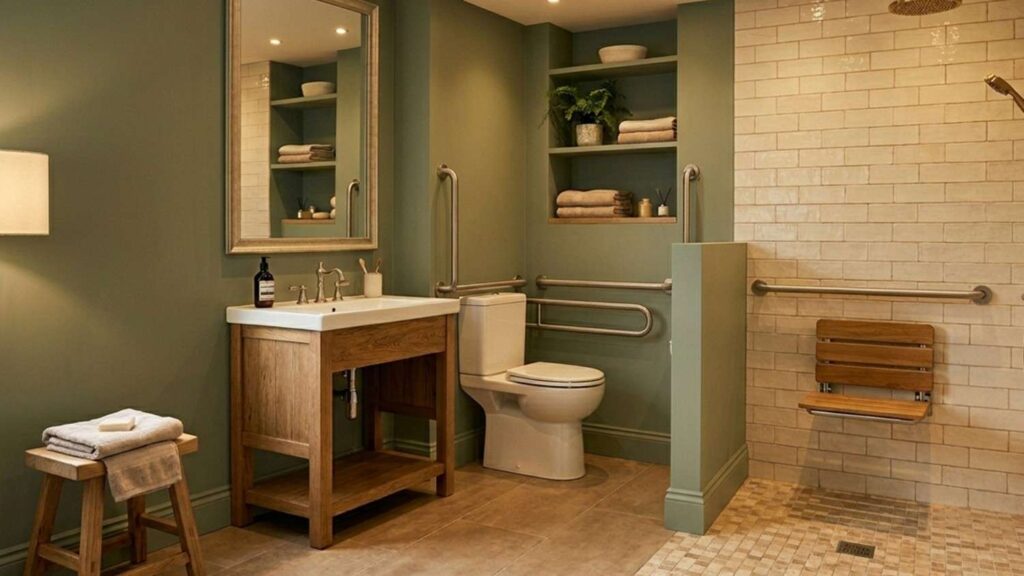
Exact specs, practical advice, and everything a homeowner or caregiver needs to get this right the first time.
What’s in this guide
- Why grab bars matter more than most people realise
- What ADA standards actually mean for your bathroom
- The ADA grab bar specifications: height, length, diameter
- Placement by bathroom zone
- Types of grab bars
- Materials and finishes
- Installation: what to know before you start
- The most common grab bar mistakes
- Applying ADA standards in a private home
- Frequently asked questions
The bathroom is statistically the most dangerous room in the home. Each year, nearly 230,000 bathroom injuries are treated in US emergency rooms — and the majority involve slipping or falling in wet environments near showers, bathtubs, and toilets.
The single most effective, lowest-cost intervention available? A correctly installed grab bar.
Yet despite their importance, grab bars are frequently installed in the wrong location, at the wrong height, or anchored in ways that fail under load — turning a safety feature into a false sense of security. Understanding the ADA’s grab bar standards for bathrooms gives you a precise, evidence-based framework for getting this right, whether you’re modifying a private home, renovating a rental, or planning an accessible build from scratch.
This guide covers everything: what the standards actually require, how to apply them room by room, and how to choose and install grab bars that will genuinely perform when they are needed most.
1. Why Grab Bars Matter More Than Most People Realise
Grab bars are often treated as an afterthought — something added to a bathroom once mobility has already declined, usually under time pressure and without proper planning. This approach leads to poorly placed bars, inadequate anchoring, and missed opportunities to prevent falls before they happen.
The data tells a clearer story. Falls in the bathroom are a leading cause of injury-related hospitalisation among adults over 65. A properly placed grab bar reduces fall risk in the bathroom by an estimated one third. That is a meaningful reduction in risk from a product that, professionally installed, costs between $170 and $350 per bar.
Beyond injury prevention, grab bars change the daily experience of a bathroom for anyone with a mobility limitation, chronic pain condition, or recovering from surgery. The ability to lower yourself onto a toilet seat confidently, step over a tub edge without bracing against a towel rail, or stand in a shower without gripping the wall — these are not small things. They are the difference between using a space independently and needing assistance every time.
WORTH KNOWING
The global grab bar market is projected to grow from approximately $910 million in 2025 to $1.38 billion by 2032 — driven by ageing populations, a growing aging-in-place movement, and increasing awareness that bathroom safety is a design standard, not a medical accommodation.
2. What ADA Standards Actually Mean for Your Bathroom
The Americans with Disabilities Act (ADA) was enacted in 1990. Its Standards for Accessible Design set out detailed technical requirements for accessible facilities — including bathrooms — in public buildings, commercial properties, and multi-family housing. The relevant grab bar specifications are found primarily in Section 609 of the ADA Standards.
Technically, ADA requirements apply to commercial and public spaces, not to private single-family homes. However, for homeowners and renovation professionals, the ADA standard has become the de facto benchmark for bathroom safety and accessibility in residential settings. When a contractor, occupational therapist, or accessibility specialist talks about “ADA-compliant grab bars for bathrooms,” they are using the standard as a trusted reference — not suggesting your home is legally required to comply.
That distinction matters for two reasons. First, it gives you flexibility in a private home to adapt placements to the specific user’s needs — their height, reach, and mobility pattern — rather than following measurements mechanically. Second, it means the ADA specification is a floor, not a ceiling. You can always do more.
NOTE FOR COMMERCIAL / PUBLIC FACILITIES
If you are fitting out a commercial space, rental property, or any facility subject to ADA compliance, the specifications in this guide are legally binding requirements, not recommendations. Consult a certified accessibility specialist and your local building authority to confirm full compliance.
3. The ADA Grab Bar Specifications: Height, Length, Diameter
The core ADA grab bar specifications for bathrooms are straightforward once you understand what each measurement refers to. Here are the key numbers.
| Specification | ADA Requirement | Notes |
|---|---|---|
| Mounting height (horizontal bars) | 33–36 inches above finished floor | Measured to top of gripping surface |
| Diameter / cross-section | 1.25–2 inches | Allows a full hand grip; 1.5″ is most common residential size |
| Clearance from wall | 1.5 inches | Minimum space between bar and wall surface |
| Structural strength | Must support 250 lbs (1,112 N) | Applied at any point on bar, fastener, or mounting structure |
| Surface texture | Non-slip gripping surface required | Knurled or peened finishes are standard |
| Toilet side wall bar length | 42 inches minimum | Max 12″ from rear wall; extends min 54″ from rear wall |
| Toilet rear wall bar length | 36 inches minimum | Extends 12″ to one side and 24″ to the other from toilet centerline |
| Bathtub grab bar (back wall) | 24–48 inches long | Two bars required: one at tub rim level, one above |
| Shower transfer bar | Spans control wall + back wall to 18″ from control wall | Height: 33–36″ above floor |
| Bars near seats | Not permitted above seat | Bar must be on back wall and opposite side wall only |
One practical note on diameter: the 1.25–2 inch range accommodates a wide range of hand sizes and grip strengths. For most residential applications, 1.5 inches is the most commonly specified diameter — it fits comfortably in most adult hands and is the standard for the majority of grab bar products on the market.
4. ADA Grab Bar Placement by Bathroom Zone
Where a grab bar goes is as important as whether it goes in at all. Bars in the wrong location provide false confidence and may actually increase fall risk by encouraging a reaching motion that throws the user off balance. Here is the ADA-recommended placement for each zone of an accessible bathroom.
Toilet Area
Side wall bar: 42″ long, no more than 12″ from rear wall, extending at least 54″ forward. Supports sit-to-stand transition.
Rear wall bar: 36″ long, centred behind toilet. Supports lateral transfer from wheelchair.Height: 33–36″ AFF
Walk-In Shower
Transfer shower (36″×36″): Bar spans control wall and back wall to 18″ from control wall.
Roll-in shower: Bars on back wall and side wall opposite the seat. Never above a seat.Height: 33–36″ AFF
Bathtub
Back wall: Two horizontal bars — one at tub deck height (tub rim level) and one 33–36″ above the tub floor.
Control / head end walls: 24″ bars aid entry and exit from each end.Height varies: 33–36″ above tub floor
Shower Entry
A vertical bar at the shower entry point (18″ minimum length, bottom at 39–41″ AFF) supports balance during stepping in and out — one of the highest-risk moments in any bathroom.Vertical orientation; 39–41″ bottom height
RESIDENTIAL ADAPTATION
In a private home, ADA placements should be treated as a starting point, then adjusted for the specific user. A taller person may benefit from bars at the upper end of the 33–36″ range. Someone with limited reach to one side may need a bar on a wall the ADA does not strictly require. An occupational therapist can perform a home assessment and provide personalised placement recommendations.
5. Types of Grab Bars
Not all grab bars are the same shape, and each configuration serves a different biomechanical purpose. Knowing which type you need for each location prevents the common mistake of installing a horizontal bar where a vertical one would provide better support — or vice versa.
Horizontal Bars
The most common type. Used beside toilets, along shower walls, and behind bathtubs. Supports pushing up from seated position and lateral stability.
Vertical Bars
Installed at shower or tub entries. Supports balance when stepping over a threshold. The user grips it as they would a handrail — pulling themselves upright.
Diagonal / Angled Bars
Installed at 45°. Versatile — one end supports a lower grip (seated), the other a higher grip (standing). Well-suited for smaller bathrooms with limited wall space.
Fold-Down / Flip-Up Bars
Hinged bars that fold flat when not in use. Ideal when a bathroom is shared between users with and without mobility needs, or where space around the toilet is constrained.
L-Shaped / Combination Bars
A single unit combining horizontal and vertical sections. Replaces two separate bars, reduces installation points, and provides smooth transition between orientations.
Clamp-On / Bathtub Rail
Attaches to the bathtub edge without wall anchoring. Not ADA compliant for commercial use, but a practical option in rentals or situations where wall mounting is not possible.
6. Materials and Finishes: What to Choose and Why
Grab bars operate in one of the most demanding environments in the home — constant moisture, temperature fluctuation, soap residue, and daily physical loading. Material choice directly affects how long a bar performs and whether it remains safe over time.
Stainless Steel
The standard choice for ADA bathroom grab bars. Stainless steel offers excellent corrosion resistance, structural rigidity, and longevity in wet environments. It supports the 250-lb load requirement comfortably and is available in a range of finishes. The trade-off is that it can feel cold to the touch — a minor consideration for most users.
Brass
Warmer to the touch and available in premium decorative finishes (oil-rubbed bronze, polished gold). Structurally sound for residential use, but requires more maintenance to prevent tarnishing in humid environments. A good choice when aesthetics are a priority and the bathroom sees controlled humidity.
Plastic / Nylon-Coated
Warmer to touch than bare metal and often features textured surfaces for improved wet grip. Load capacity varies significantly by product — always verify the weight rating before purchasing. More commonly seen in residential grab bars than commercial ADA applications.
Finishes
Modern grab bars are available in virtually every bathroom finish: chrome, brushed nickel, matte black, bronze, satin brass, and polished white. The days of exclusively clinical-looking grab bars are over. Coordinating bar finishes with tapware, towel rails, and hardware is now straightforward — meaning an ADA-compliant bathroom does not have to look like one.
Surface Texture
ADA standards require a non-slip gripping surface. The two most common treatments are knurled (a pronounced cross-hatch pattern for maximum grip) and peened (a subtler sandblasted finish, slightly gentler on the hand). For wet environments such as showers, knurled or textured finishes are generally recommended.
7. Installation: What to Know Before You Start
Correct installation is where grab bar projects most often go wrong. A bar that pulls out of the wall under load is worse than no bar at all — it removes support at exactly the moment the user is most vulnerable.
The Golden Rule: Always Anchor into Studs
The ADA requires grab bars to support 250 lbs applied at any point. Standard drywall anchors — even heavy-duty ones — cannot reliably meet this requirement in most wall constructions. Anchor into wall studs wherever possible. Use a stud finder before marking your installation points, and verify stud location by drilling a small pilot hole before committing to the final position.
What to Do When Studs Aren’t Where You Need Them
Bathroom layouts rarely put studs exactly where ADA placements require. Options include toggle bolts rated for 250+ lbs per fastener, backing boards (a sheet of plywood or blocking installed behind the wall surface), or specialty grab bar anchors designed for tile and hollow-wall applications. If you are renovating from scratch, the most reliable approach is to install blocking — solid timber between studs — during construction, before the walls are tiled or finished.
Tiled Surfaces
Drilling into tile requires a tile-rated drill bit (carbide-tipped or diamond-core) and slow, careful drilling to avoid cracking the tile surface. Always use a template or masking tape to mark the drill point precisely before cutting into tile.
After Installation: The Tug Test
Once installed, every grab bar should be tested with a firm, forceful pull in all directions before the bathroom is used. Any movement — however slight — means the installation needs to be redone. A properly installed bar should feel as solid as the wall itself.
Professional Installation
Professional grab bar installation in 2025 typically costs $170–$350 per bar in the US, including labour and hardware. For most households, professional installation is the right call — not because the task is technically complex, but because the consequences of getting it wrong are serious. Look for CAPS-certified (Certified Aging in Place Specialist) installers, who are trained specifically in home accessibility modifications.
8. The Most Common Grab Bar Mistakes
These errors appear repeatedly in both DIY and professionally installed bathrooms. Knowing them in advance makes them easy to avoid.
- Anchoring into drywall only.A bar that passes the initial tug test but fails under real-world loading because it was anchored into drywall rather than studs is the most common and most dangerous mistake.
- Installing a towel rail and assuming it will work as a grab bar.Towel rails are not rated for body weight loads. Using one as a grab bar is a fall waiting to happen.
- Using the wrong bar orientation.A horizontal bar at the shower entry provides little help stepping over a threshold — a vertical bar does. Matching orientation to the biomechanical need matters.
- Installing at the wrong height for the actual user.ADA measurements are averages designed for public accessibility. In a private home, adjust to the specific person’s height and reach.
- Placing bars too far from the point of use.A grab bar that requires reaching or leaning to access provides less support and more instability. It should be within natural reach from the position it is intended to support.
- Skipping the shower entry bar.Stepping over a tub edge or shower threshold is statistically one of the highest-risk moments in the bathroom. A vertical bar at the entry point is one of the highest-value placements in any bathroom.
- Choosing style over structure.Decorative grab bars are fine — as long as they meet the load rating. Always verify the weight capacity specification before purchasing any grab bar.
9. Applying ADA Grab Bar Standards in a Private Home
As noted earlier, ADA requirements are not legally binding for private single-family homes. But they represent the most rigorously tested, widely validated placement framework available — and applying them to a home bathroom is almost always the right starting point.
There are a few ways in which a home installation might deliberately diverge from the ADA standard — and good reasons to do so:
User-Specific Height Adjustments
The 33–36″ mounting height is designed for a wide population range. A taller user may find bars at 36–38″ more comfortable and biomechanically effective. A shorter user may need bars closer to 30–32″. Where only one person uses the bathroom, optimise for them.
Additional Bars Beyond What ADA Requires
The ADA specifies minimums. A home bathroom can always include more grab bars than required — for example, adding a vertical entry bar to a shower that would not technically require one under ADA, or installing bars on both sides of a toilet rather than just the side wall.
The Role of an Occupational Therapist
For anyone with a specific condition — stroke, MS, Parkinson’s, post-hip or knee replacement — an occupational therapist (OT) can conduct a home assessment and provide placement recommendations tailored to that individual’s movement patterns, dominant hand, reach, and balance profile. This produces a significantly better outcome than following any published standard alone, including the ADA’s.
FUTURE-PROOFING TIP
If you are renovating a bathroom and do not currently need grab bars, install blocking in the walls now — solid timber backing behind the finished surface at ADA-standard locations. This costs very little during a renovation and means that when grab bars are needed in future, installation takes an hour rather than a major wall repair project.
10. Frequently Asked Questions
Do ADA grab bar standards apply to my home bathroom?
Not legally — ADA requirements apply to commercial and public facilities, not private single-family homes. However, the ADA standards are widely used as the best-practice reference for residential accessibility modifications, and following them is strongly recommended as a starting point.
Can I install grab bars myself, or do I need a professional?
Grab bars can be installed DIY if you are confident anchoring into studs or using appropriate heavy-duty fasteners — and if you are comfortable drilling into tile. For most households, particularly where the bar will be used daily by someone with a mobility need, professional installation by a CAPS-certified specialist is the safer choice. The cost is $170–$350 per bar, and a properly installed bar should last the lifetime of the bathroom.
What is the correct height for a grab bar in an ADA bathroom?
Horizontal grab bars in ADA bathrooms must be mounted between 33 and 36 inches above the finished floor, measured to the top of the gripping surface. This applies at the toilet, in the shower, and at the bathtub. Vertical bars at shower entries have different specifications — the bottom of the bar should be between 39 and 41 inches above the floor.
How long should grab bars be?
Length varies by location. Toilet side wall bars must be at least 42 inches long. Toilet rear wall bars must be at least 36 inches. Bathtub bars range from 24 to 48 inches depending on the wall. Shower transfer bars span from the control wall to at least 18 inches along the back wall. In residential settings, longer is generally better — a longer bar provides more flexibility in where the user grips it.
Can grab bars be decorative and still be ADA compliant?
Absolutely. Grab bars are available in chrome, brushed nickel, matte black, oil-rubbed bronze, polished brass, and many other finishes that blend with standard bathroom hardware. The ADA requirements relate to structural performance and dimensions — not appearance. The only caveat is to verify that any decorative grab bar meets the 250-lb load rating and has a non-slip gripping surface.
Is there financial assistance available for installing ADA bathroom grab bars?
In many cases, yes. In the US, some Medicare Advantage plans cover bathroom safety modifications including grab bars. Veterans may qualify for up to $6,800 through VA Home Improvement and Structural Alterations (HISA) grants. Some states and counties offer Community Development Block Grant (CDBG) programs for low-income homeowners. It is always worth contacting your insurer, local health authority, or a home modification specialist to explore what funding may be available.
Getting It Right
A well-planned ADA bathroom grab bar installation is one of the most impactful, cost-effective improvements a home can have. The difference between a bar installed thoughtfully — right height, right location, anchored properly — and one installed carelessly is not a minor aesthetic matter. It is the difference between a reliable safety feature and a hazard waiting to reveal itself.
The ADA standard gives you a framework built on decades of research and real-world accessibility practice. Apply it as a baseline, adapt it to the actual person using the space, install it correctly, and the result is a bathroom that supports independence, reduces risk, and requires no further thought.
At AllAccess Health, we help homeowners, caregivers, and renovation professionals navigate exactly these decisions — connecting you with CAPS-certified installers, accessibility assessments, and the right products for your specific situation.